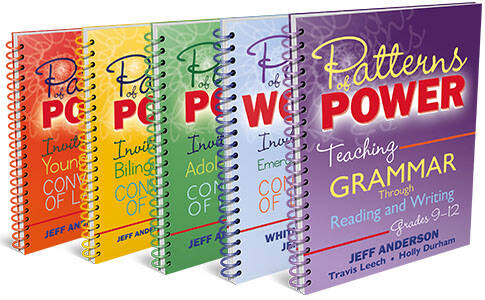
Several new and well-known Stenhouse authors will be signing their books during NCTE Nov. 20-22 in San Antonio. Come to booth #421 to have your book signed, to find out about our latest titles, preview videos, or just to say hello!
Signing schedule:
Friday, Nov. 21
12:30-1 p.m.
Franki Sibberson and Karen Szymusiak: Beyond Leveled Books, Second Edition
Debbie Miller: Teaching with Intention
Ann Marie Corgill: Of Primary Importance
1-1:30 p.m.
Martha Horn and Mary Ellen Giacobbe: Talking, Drawing, Writing
5-5:30 p.m.
Kelly Gallagher: Teaching Adolescent Writers
Jeff Anderson: Everyday Editing
Aimee Buckner: Notebook Know-How
Saturday, Nov. 22
11:30 a.m.-Noon
Mary Cappellini: Balancing Reading and Language Learning
Noon-12:30 p.m.
Stephanie Harvey: Strategies That Work, Second Edition
Janet Allen: More Tools for Teaching Content Literacy
3-3:30 p.m.
Ralph Fletcher: Dude, Listen to This!
November 17th, 2008
This week, Bill Varner picked a poem to commemmorate Veteran’s Day.
A distant relative of mine recently passed away. I’d only really come to know him recently, and mostly through e-mail. He was a brilliant teacher, and also a fighter pilot in WW II. Yesterday on the radio I learned that on the 90th anniversary of WWI, “The Great War,” there are but a handful of veterans left. And each year we lose more and more veterans of WWII. In honor of Veteran’s Day this past week, here is a poem by James Tate, written as a very young man, about his father, a WWII pilot
The Lost Pilot
By James Tate
for my father, 1922-1944
Your face did not rot
Like the others—the co-pilot,
for example, I saw him
Read the rest of the poem here
November 14th, 2008
Franki Sibberson, Stenhouse author and blogger extraordinaire at A Year of Reading, recently reviewed Ann Marie Corgill’s new book, Of Primary Importance.
“Ann Marie is all about the “whys” of her teaching,” Franki writes. “She understands the theory behind all that she does and her book helps us think through our own writing workshops. She also spends a lot of time talking about the issues she has with mandated curriculum and the importance of workshop. But she also gives us some nuts and bolts. She shows us her yearlong plan and then goes into depth with each unit of study—sharing book titles and planning that goes into each unit.”
Read the entire review here. And also be sure to check out Franki’s new book, the second edition of Beyond Leveled Books.
November 13th, 2008
Sarah Mulhern is a sixth grade language arts teacher in New Jersey. Her blog, The Reading Zone, not only focuses on her teaching and students, but also showcases the work she and her students do with Monarch butterflies. In this guest blog post, you can read about how Sarah integrates Monarch butterflies into her curriculum. A short commentary follows her entry by Herb Broda, author of Schoolyard Enhanced Learning
Chrysalis. Pupa. Larva.
Typical vocabulary for a middle grades science class, but not the norm for a 6th grade language arts class. However, if you were to peek into my classroom during the first month of school, you would see students reading, writing, and observing our monarch butterflies. My bulletin boards are plastered with monarch posters, butterfly quotes, and maps of North America. The tables have tomato cages, butterfly nets, and potted milkweed covering the season tablecloths.
Our word wall includes the words chrysalis, pupa, and larva alongside language arts words like genre and visualization. While this may sound odd for a Language Arts class, I raise monarchs with my students every fall. From egg to adult, we care for and eventually release our butterflies for their journey to Mexico.
Our classroom theme is “Journeys”, as my students are on the final leg of their journey to middle school. They also get the chance to emerge every morning, as a new person- just like our caterpillars. However, this is only the beginning of our connection to monarch butterflies.
What many people do not know is that monarch butterflies are amazing creatures. They begin their lives as small yellowish eggs on milkweed plants across North America. When they hatch they are so small you need a magnifying class to find them! For the next two weeks they will do only two things- eat milkweed and create frass (caterpillar poop!). During those two weeks they will shed their black, white, and yellow striped skin four times. The fifth and final time they shed their skin they will become a chrysalis (n.b. butterflies form a chrysalis while moths form a cocoon.) This chrysalis is a bright green that is flecked with gold spots. The monarch remains in this chrysalis for approximately ten days before the green outer layer becomes clear and we can see the butterfly inside.
When this happens, the adult is ready to emerge! When my students enter my classroom in September they are immediately greeted by our first caterpillars. We begin our reading and writing workshop by sharing our monarch experiences- we read picture books and non-fiction about monarch butterflies and we write about our shared experiences in our writer’s notebooks. Two weeks ago, we were extremely lucky and both of my language arts classes were able to view a monarch emerging from its chrysalis during class!
Even better, we were able to view through the document camera, which allowed us to zoom in for an even closer look. We have used that experience as a shared memory and have been writing a class personal narrative during the active engagement aspect of our writing workshop. This serves as a model for my student’s independent personal narrative projects.
While we read and write about our monarchs in September, our monarch theme continues through the rest of the year. Monarch butterflies from east of the Rocky Mountains make a lengthy migration each spring. Some of them travel upwards of 3000 miles, from Canada to the trans-volcanic mountain range southwest of Mexico City. The trans-volcanic mountains will be home to millions of monarchs for the months of November to March. The butterflies migrate to the sanctuaries of the in the Mexican states of Michoacán and México.
And this is what makes monarch butterflies so amazing. While the summer generations have a life cycle of approximately one month, the last generation born in August/September will live for upwards of nine months. This generation will make the long and dangerous journey to Mexico, to small sanctuaries that they have never visited. Their great-great-great grandparents made the journey from Mexico to the United States the previous spring!
This migration shapes our curriculum for the rest of the year. We participate in
Journey North’s Symbolic Migration by creating paper monarchs. On the back of these monarchs we write letters in English and Spanish, working with our Spanish teacher, and the butterflies are mailed to the Journey North offices. Journey North then sends them to schools around the monarch reserves in Mexico. We can even track our monarchs’ progress on the Journey North website! In the spring, each child will receive a paper monarch from somewhere in North America. Just as our fall monarchs do not make it back to us in the spring, we receive different paper monarchs in the spring.
In the spring, each student logs onto Journey North and plots their monarch on an interactive map. They can see if their monarch has made it through the winter and can connect with the creator of the monarch they received!
All of my experience with monarchs is courtesy of an amazing organization in New Jersey-the Monarch Teacher Network. The Monarch Teacher Network is a growing network of pre-k to secondary teachers who have received training to use monarch butterflies to teach a variety of concepts and skills, including our growing connection with other nations and the need to be responsible stewards of the environment. The group hosts workshops across the country and has a sister organization in Canada. This past February I was privileged to join the MTN on a fellowship trip to the monarch bioreserves in Michoacan, Mexico.
This life-changing journey was chronicled on my blog, which you can view here. I visited the mountaintops which are home to billions of monarchs each winter. I also spent time at a bilingual P’urhépecha school in Santa Fe, Michoacan, Mexico. The few hours I spent with those students and teachers forever changed my world view. When I came home, I was able to share these experiences with my students.
We don’t just focus on monarchs in my class, though! The monarchs lead us to discussion on responsible global stewardship and conservation. Last year we had a fantastic time participating in a project called Voices…From the Land. In Voices, students use natural materials to create (and photograph) “eco-art” in an outdoor setting. The art is based on that of Andy Goldsworthy. The students then write poetry or prose about the art and their experience… giving the art, landscape and authors a “voice”. Students then layout, design and publish a full-color hardcover book of their photographs and poetry, sharing books with other schools in the project. The schools involved come from the United States, Canada, New Zealand, and Peru. Last year, we produced a gorgeous book of art and poetry, along with receiving similar books from a class in Canada and New Zealand. This year, we hope to correspond with students from that school in New Zealand! In one simple project we covered curriculum areas from language arts, science, technology, and social studies.
Every year my students fall in love with the monarchs, and I fall in love with them all over again. We build a community around our caterpillars, say goodbye to our butterflies as a family, and work hard to be responsible citizens of the world. My teaching was revolutionized by my time spent with the Monarch Teacher Network. It was the best professional development I have ever participated in- which explains why I spend part of each summer as a volunteer staff member training more teachers! If you are interested in the Monarch Teacher Network workshops, please check their website. If your state isn’t listed, leave a comment and maybe we can work something out! Every year the project expands to new states (and continents)! If you have any experiences, questions, or comments about monarchs in the classroom, please comment!
Wow! What wonderful ways to integrate the monarch butterfly into so many aspects of the curriculum! I want to be sure to reinforce the mention of the Journey North website that is included in the entry. Journey North includes several highly interactive activities for students.
The Tulip Project, for example is a wonderful way for students to take part in a real scientific experiment. Bulbs are planted in the fall and you record the zip code of your school. In the spring you note when the bulls first emerge and then record when they are in bloom. What I love about the activity is that students plant the bulbs in the fall and then can monitor the results of their own labor in the spring.
As students all over North America record the emergence and eventual bloom of their tulips, an interactive map allows classes to follow the progression of spring across the continent! It really is one of the simplest interactive scientific projects that I have seen. Be sure to check out Journey North—there are a number of other interactive projects available there also.
Commentary by Herb Broda
November 12th, 2008
This week, our editor Bill Varner was insipired by this week’s presidential election in his choice of poetry.
Frederick Douglass
By Robert Hayden
When it is finally ours, this freedom, this liberty, this beautiful
and terrible thing, needful to man as air,
usable as earth; when it belongs at last to all,
Read the rest of the poem here
November 7th, 2008
“Classroom space impacts everything: Instruction, behavior, and our sense of well-being,” writes Debbie Diller in her new book, Spaces & Places. Creating a classroom environment that supports instruction and allows students to be comfortable and take risks without stress, is not an easy task. Mix in even just a few ELL students into that classroom, and the task becomes even more difficult.
To support ELL students in their learning, Debbie suggests including specific literacy stations in the classroom, adding books that especially support ELL students to your library, and finding a quiet place where second language learners can take a break from the commotion of a busy classroom.
Read more of Debbie’s ideas in Part II of our Questions & Authors installment focused on ELL classrooms.
- “Be sure to plan for a comfortable, well-organized whole group instruction area where the whole class can gather for meetings and instruction. I often invite ELL students to sit near the front and have native English speakers all around them. I’ve found this creates a “surround sound” type of setting. Sometimes I’ve noticed ELL students choosing to sit near the outside of the group, but bringing them in helps them be more included in the group. Place the whole group teaching area near a bulletin board/wall/dry erase or chalkboard, so you can post anchor charts and refer to them while teaching. Use cooperative learning and group goals to increase interaction across students of different cultures.
- Have music materials (CD player or tape recorder and music) readily accessible in the whole group teaching area, especially if you work with young children. Use these for transition times and to allow students to move and use their bodies. ELL students can use their bodies to interpret stories and songs even if they don’t know all the English words yet.
- Create anchor charts with students, being sure to elicit ideas from your ELL students. Use their language, so they understand what you’re teaching. Pay close attention to language complexity. Use concise and deliberate vocabulary. Remember to include pictures on your anchor charts. This helps all students remember, and can be especially helpful for ELL students.
- Create charts that show connections between English and students’ native languages. For example, make connections to cognates, grammar, punctuation, expressions, and word order.
- Make “I Can” lists with your class, too. Again, get ideas for what kids can practice at literacy work stations and use their language on these lists. Be clear and concise. Don’t be too wordy. Add digital photos to the list that illustrate students doing these activities at the station. A picture is worth a thousand words and will help all children understand what to do for independent practice.
- When teaching new vocabulary words related to literature or content areas, include a digital photo whenever possible to help illustrate the word and anchor it in students’ memory. I like to use Google images to find these pictures. Post a chart with this week’s words on it, and include kid-friendly definitions (as suggested by Isabel Beck in Bringing Words to Life as she writes about Tier II words) as well as a picture beside each new word. Refer to the chart constantly as you teach with it. Teach related words from ELL children’s first language to help them make connections.
- I always include the following literacy stations in an ELL classroom, and sometimes even have multiples of these to give students more opportunities to hear and use English as they practice: listening station; computer station; drama or retelling station; science or nonfiction reading station; creation station. Have a space for each, so students know where to find and work with the materials. Include students in showing the rest of the class how to use each station as you introduce them to the whole class.
- In the classroom library, have a few special baskets that will especially support ELL students. Include the following kinds of baskets: books by student authors; wordless books (for telling stories); books we love (from read aloud that are familiar); books written in two languages; as well as other categories of fiction and nonfiction books and magazines. Always label the baskets and have students help you sort the books to put into these. Fasten a label on the front of each basket that includes the type of book along with a picture representing this genre or group of books to help students find and return books. Also, be sure to include books representing the cultures and heritage of all students in your classroom.
- Be sure to include a small group teaching area. All students will grow when provided with differentiated small group instruction that meets their needs. ELL students will benefit from this type of teaching and sitting around a table together will help to facilitate discussion which builds oral language and vocabulary.
- Have a space in the classroom (perhaps the classroom library) where students new to U.S. can take a short break during the day. It can be tiring trying to listen most of the day to a language you don’t understand. Let them sit quietly and look at books.
- For classrooms with limited space, use wall space outside of the classroom (or in the school lobby) to communicate to parents what students are learning. Use pictures and text (perhaps in English and multiple languages for parents) created by students in displays. Include an accordion folder with take-home sheets for parents explaining what students are studying with suggestions of things to try at home related to the learning displayed.)”
How do you accommodate ELL students in your classroom?
November 3rd, 2008
The Stenhouse office is right across the street from the boyhood home of Henry Wadsworth Longfellow. I’d never really thought much of his work until I took a tour a few years ago of the home. I had no idea he was responsible for so many common phrases and sayings in our language today. Walt Whitman wrote after his death: “He comes as the poet of melancholy, courtesy, deference — poet of all sympathetic gentleness — and universal poet of women and young people. I should have to think long if I were ask’d to name the man who has done more and in more valuable directions, for America.” So here’s a Longfellow poem for Halloween. I’m not sure I quite get the last two stanzas — so if you have any insight, let me know!
Haunted Houses
By Henry Wadsworth Longfellow
All houses wherein men have lived and died
Are haunted houses.Through the open doors
The harmless phantoms on their errands glide,
With feet that make no sound upon the floors.
We meet them at the door-way, on the stair,
Along the passages they come and go,
Impalpable impressions on the air,
A sense of something moving to and fro.
There are more guests at table than the hosts
Invited; the illuminated hall
Is thronged with quiet, inoffensive ghosts,
As silent as the pictures on the wall.
The stranger at my fireside cannot see
The forms I see, nor hear the sounds I hear;
He but perceives what is; while unto me
All that has been is visible and clear.
We have no title-deeds to house or lands;
Owners and occupants of earlier dates
From graves forgotten stretch their dusty hands,
And hold in mortmain still their old estates.
The spirit-world around this world of sense
Floats like an atmosphere, and everywhere
Wafts through these earthly mists and vapours dense
A vital breath of more ethereal air.
Our little lives are kept in equipoise
By opposite attractions and desires;
The struggle of the instinct that enjoys,
And the more noble instinct that aspires.
These perturbations, this perpetual jar
Of earthly wants and aspirations high,
Come from the influence of an unseen star
An undiscovered planet in our sky.
And as the moon from some dark gate of cloud
Throws o’er the sea a floating bridge of light,
Across whose trembling planks our fancies crowd
Into the realm of mystery and night,—
So from the world of spirits there descends
A bridge of light, connecting it with this,
O’er whose unsteady floor, that sways and bends,
Wander our thoughts above the dark abyss.
October 31st, 2008
I have long know that Ann Marie Corgill is a gift to her students, their parents, and her colleagues. Now this brilliant early childhood educator has given us all a professional gift.”
–Shelley Harwayne
What does a writing year in a primary classroom look like? Join Ann Marie Corgill as she shares her thinking from fifteen years of teaching and gives you a clear picture of successful writing instruction in her new book, Of Primary Importance.
Ann Marie immerses you in her classroom and lays the foundations for helping young writers — from creating the right learning environment to setting writing goals to structuring writing studies. Of Primary Importance is rich with student examples and detailed units of study on poetry, nonfiction, and fiction that demonstrate the writing workshop process at work.
You’ll see how mistakes are just as much a part of the success of the writing year as those magical writing moments, and discover new ways for students to publish and celebrate their work. Rather than offering step-by-step direction, Ann Marie encourages your own thinking, supports your own work, and fills your head with questions and ideas. You will come away energized, challenged, and wiser in your classroom writing instruction.
Preview the entire book online now
October 30th, 2008
“Every population has students who are in a subculture where college success is not part of the game. One of the things I try to address is how do we reverse that culture–how do we get into that culture, find its strengths, celebrate those strengths, and still propel students to academic success?”
In today’s podcast, Robin Turner reflects on the obstacles he overcame to gain a college degree and how the successes he experienced applying the principles of California’s Puente Project inspired his book, Greater Expectations.
Get a glimpse into Robin’s classroom at Magnolia High School in Anaheim, California. We’ve also just posted a sample clip from his new DVD, Academic Literacy, due out early next month.
Listen to the podcast
October 28th, 2008
Nothing says fall more than Halloween. In my town, people from the more rural sections descend upon my neighborhood in wild costumes. Some of my neighbors really go all out with haunted houses and decorations. I love taking the kids trick or treating out in the crowded streets. Here’s a poem by Kenn Nesbitt called “Halloween Party.” I could see myself in this situation!
Halloween Party
By Kenn Nesbitt
We’re having a Halloween party at school.
I’m dressed up like Dracula. Man, I look cool!
You can read the rest of the poem here
October 24th, 2008
Previous Posts